


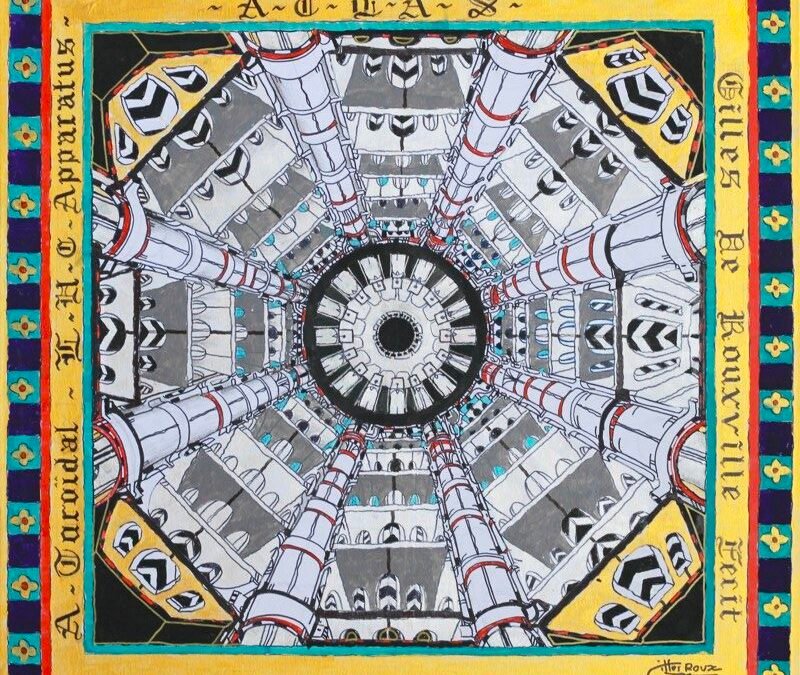
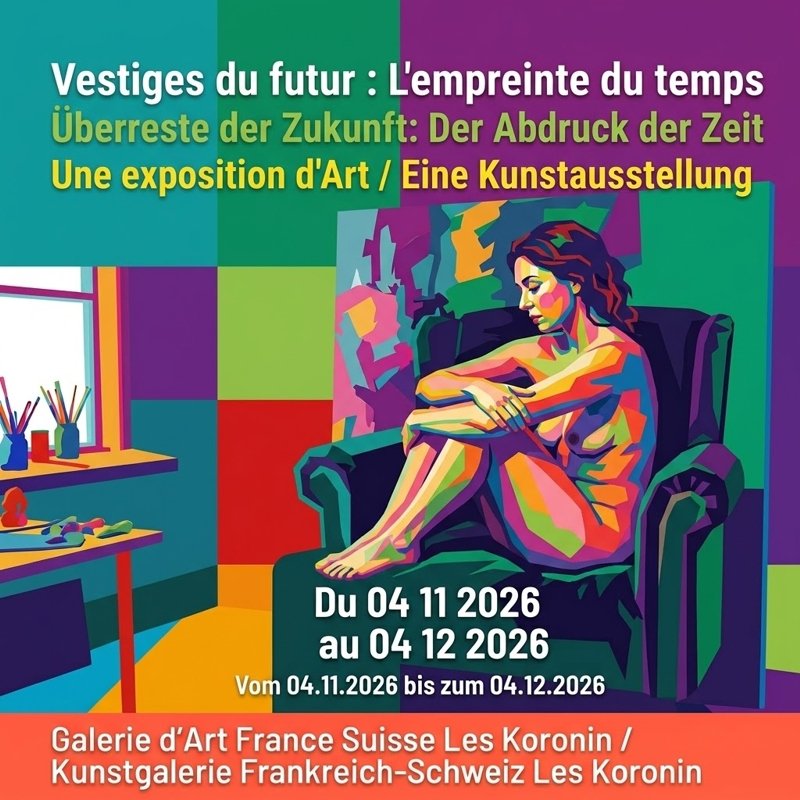
First period of the exhibition: from November 4 to December 4, 2026
Due to an unprecedented wave of artistic enthusiasm and the remarkable number of major works received, the France-Switzerland Art Gallery, Galerie Les Koronin, is delighted to announce the extension of this event.
Originally conceived as a one-month exhibition, the event will now exceptionally run for two consecutive months, from November 4, 2026, to January 4, 2027. During this extended period, visitors will discover two different yet complementary groups of artists.
The Concept: a Sensitive Exploration of Cyclical Time, Contemporary Ruins, and What We Leave Behind
Through this double exhibition, visitors are invited to reflect on the memory of places and materials. Furthermore, the exhibition explores the passage of time and its lasting impact on our surroundings.
From painting to uchronias and AI-assisted visual creation, each month reveals new visual narratives. In this way, the two successive periods offer complementary perspectives on memory, transformation, and artistic expression.
The Imprint on Bodies and the Praise of Suspended Time
Plastic Arts: Between Body, Slowness, and Memory
From a plastic arts perspective, the exhibition explores memory through the prism of humanity and movement. Moreover, it goes far beyond the simple observation of matter.
Instead, the artists examine the traces of time, both past and future, as they become engraved on bodies, postures, and suspended gestures.
Above all, this exhibition celebrates the virtue of slowness. It embraces an art of “standing still”, where movement pauses and allows what oblivion tries to steal from us to resurface.
In this context, the viewer is invited to slow down and contemplate. Faced with the ruins left by the passage of time, our gaze is encouraged to linger, to feel, and ultimately, to reconsider what remains.
The Artists – First Exhibition Period
To begin this artistic exploration of movement and memory, we are delighted to present the works of:
-
- Gilles Roux
- Marie Isabelle
- Valaine de Ranson
- Barbara Le Louverot
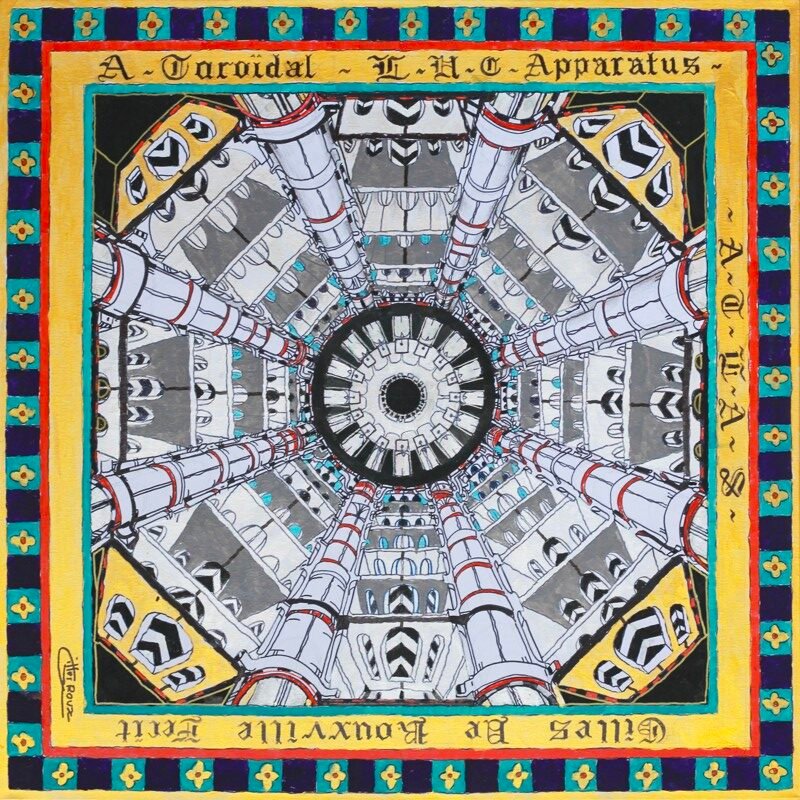
gilles-georges-roux-atlas-lhc-galerie-art-koronin.jpg
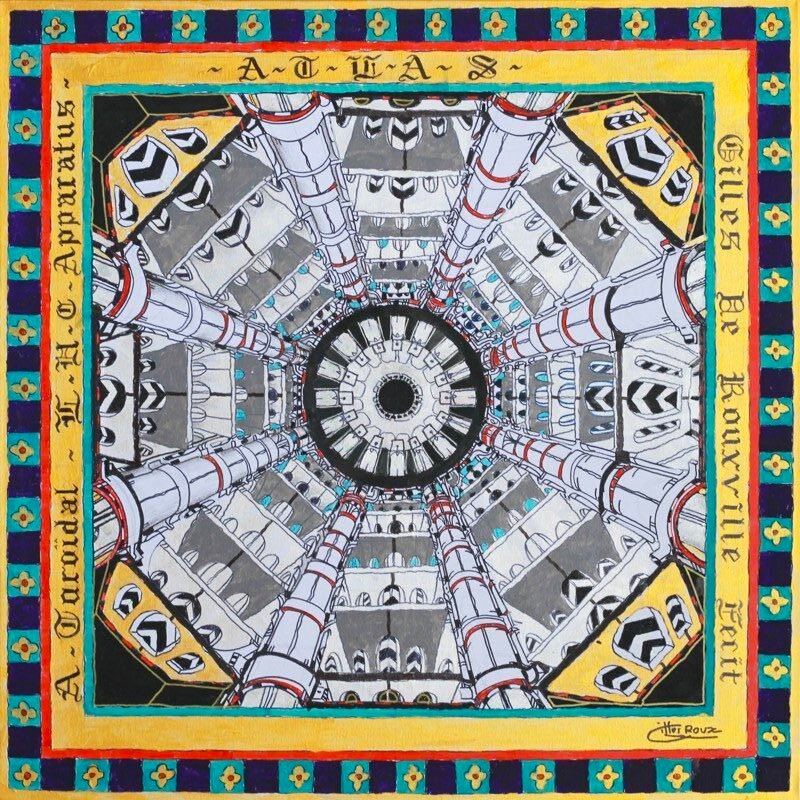
Gilles Roux : ATLAS – 2025 100x100cm, acrylique.
valaine-de-ranson-nu-feminin-galerie-art-koronin.jpg
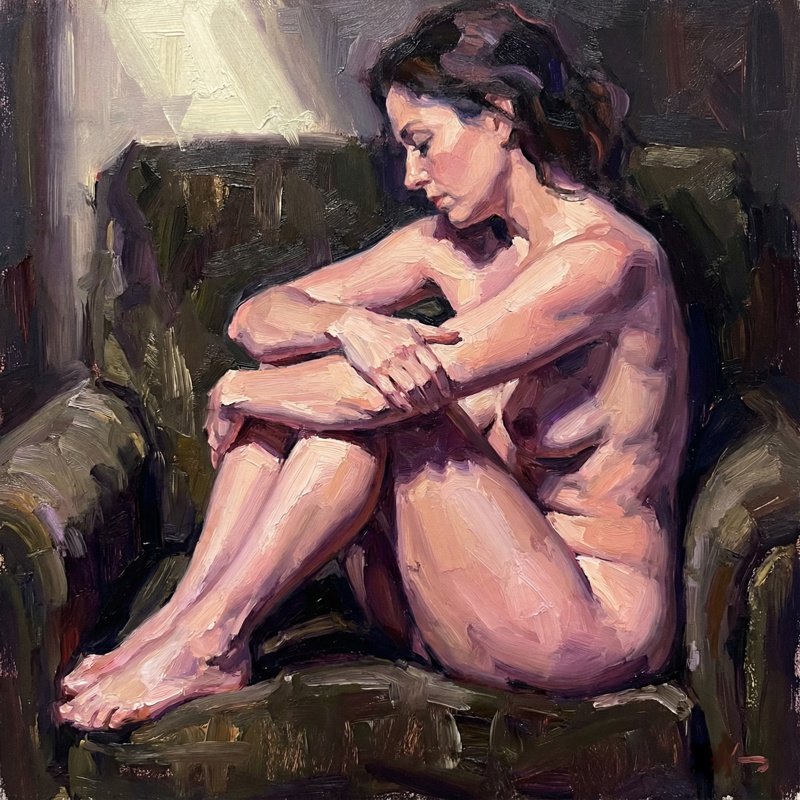
Valaine de Ranson – L’empreinte du temps et l’éloge, 150 x 155cm, 2015.
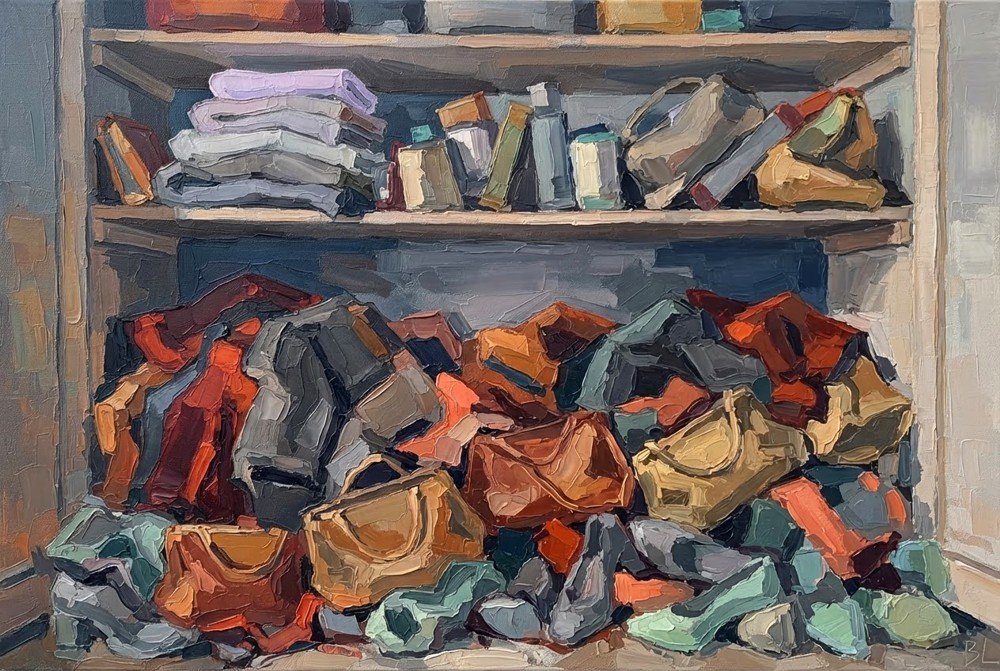
barbara-le-louverot-vanites-modernes-galerie-art-koronin.jpg
Barbara Le Louverot, Vanités modernes (accumulation de sacs et chaussures), acrylique et plâtre sur carton épais, 80 x 55 cm, 2026.
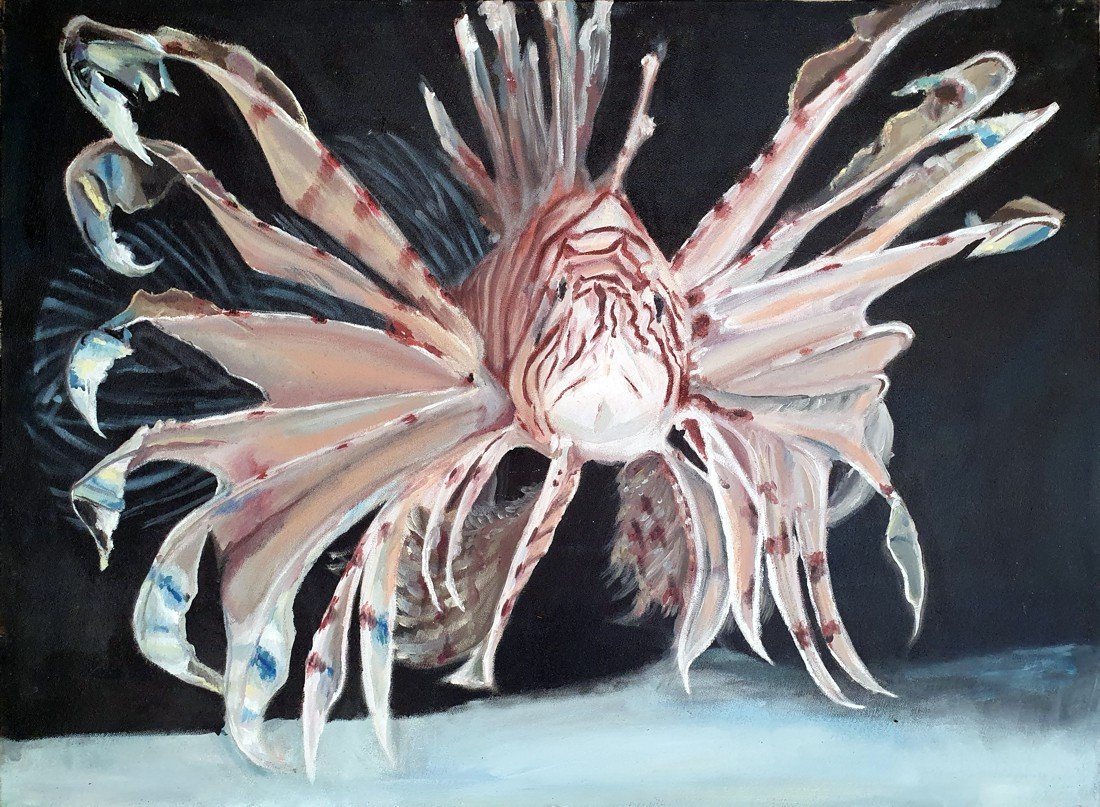
marie-isabelle-rascasse-volante-galerie-art-koronin.jpg
Marie Isabelle – La rascasse, environ 70×54 cm, Acrylique sur toile – 2014.
Gille Roux
Gilles Georges Roux – Meta-illumination of a Quantum Sanctuary
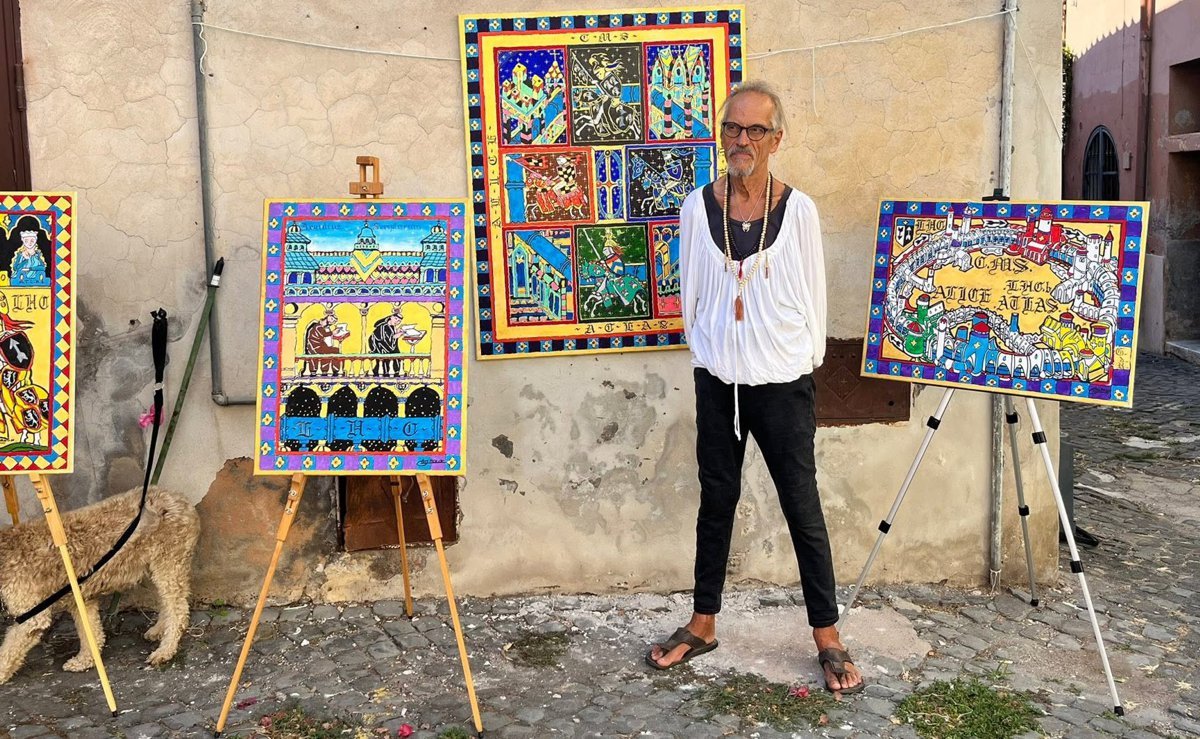
At the crossroads of fundamental physics and medieval fable, Gilles Georges Roux explores the memory of time through the prism of a unique alter ego: Gilles de Rouxville, a 14th-century copyist monk from Cluny. Thus, in his meta-illuminations, the colossal architectures of CERN’s Large Hadron Collider (LHC) transform into sacred rose windows, cathedrals, and mandalas.
For this reason, his vibrant and deliberately human touch reintroduces the sensitivity of craftsmanship against the geometric precision of machines. With his major work ATLAS, the artist erects the particle detector as a silver giant whose steel columns suspend time. In conclusion, here is a striking visual meditation on what oblivion and the future invite us to contemplate.
Artwork Analysis: ATLAS by Gilles Georges Roux
-
First of all, let us examine the masterwork chosen by the artist for this exhibition: ATLAS (2025), an acrylic on canvas measuring 100 x 100 cm. On the one hand, the visual composition of the canvas captures the geometric monumentality of CERN’s famous detector. The work erects what the catalogue describes as a “silver giant” whose “eight steel columns sustain its sky of darkness”. Seen in this manner, the mechanical structure transforms under the brush into a gothic rose window or a medieval mandala of great rigor.
-
Furthermore, the artist subtly plays with thermal and symbolic contrasts. Indeed, the descriptive text of the work highlights the duality of this architecture where the “absolute cold” of its enclosure coexists with the “burning plasma within”.
-
Finally, through this bold marriage between fundamental physics and the aesthetics of ancient manuscripts, Gilles Georges Roux transcends simple scientific illustration. The work becomes a poetic and timeless meditation on the memory of machines, inviting the viewer to contemplate the sacred beauty of our modern technological vestiges.
Valaine de Ranson – The Imprint of Time and the Praise of Revealed Femininity
First of all, this oil painting by Valaine de Ranson immerses us in an intimate contemplation of the female body facing the passage of years. Indeed, the artist approaches with great delicacy the sense of vulnerability associated with ageing and bodily transformations, often wrongly perceived as a loss of identity.
However, far from yielding to resignation, the composition transforms this introspection into a true quest for serenity. Thanks to a vibrant and generous brushstroke, the traces of time engraved on the skin become precious vestiges upon which a new grace is built. The body, folded inward, does not hide; on the contrary, it reclaims its story, liberated from dictates and stereotypical gazes.
Thus, the painting delivers a powerful message of acceptance and pride. Finally, the marks of time bring an unprecedented light and radiance to this figure, proving that every stage of life holds a sovereign beauty and a profound majesty.
Analysis of the work: The Mark of Time and Revealed Beauty
A sovereign inner world: The female figure, seated and curled up in a dark-coloured armchair, assumes a posture of intimate contemplation. This body, wrapped around itself, does not express defeat, but rather a protected space for introspection, free from prying eyes and stereotypical judgements.
Material and light: Through a generous and vibrant application of oil paint, Valaine shapes the forms with a carnal candour. The light that sculpts these curves acts as a true revealer: far from concealing the marks of time, it illuminates them, transforming them into true lines of strength.
An allegory of resilience: This work challenges the cultural imperative of eternal youth. Indeed, it celebrates the dignity of a body that evolves, transforming the traces of the years into radiance, serenity and a deep sense of pride.
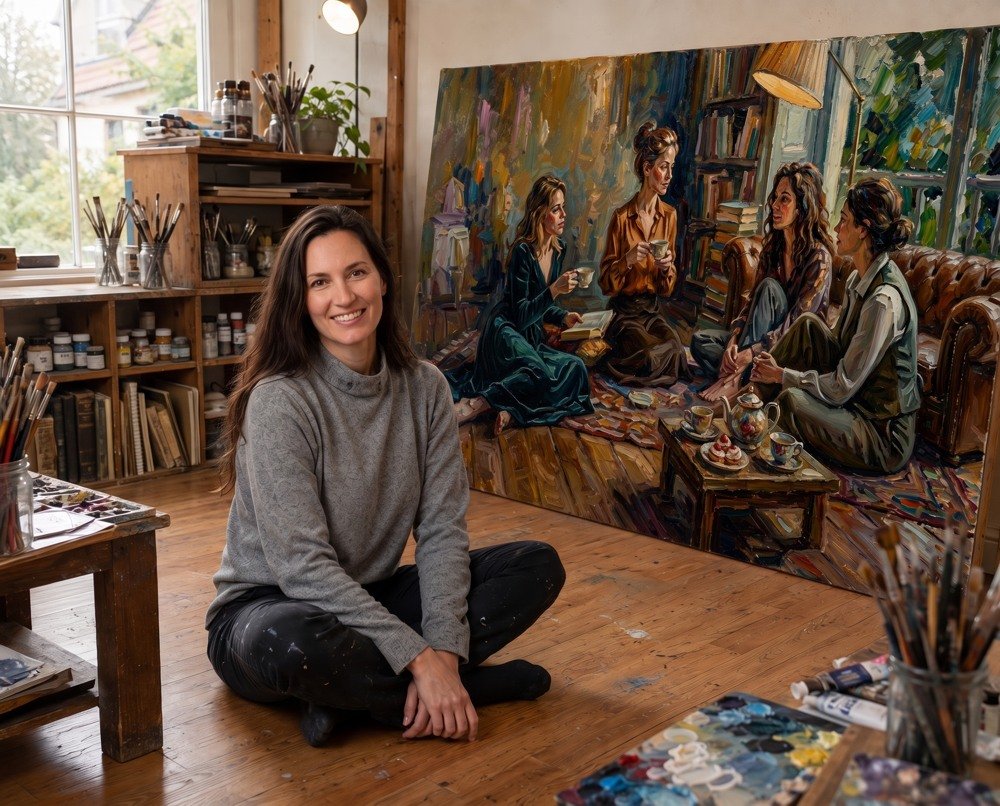
Valaine de Ranson
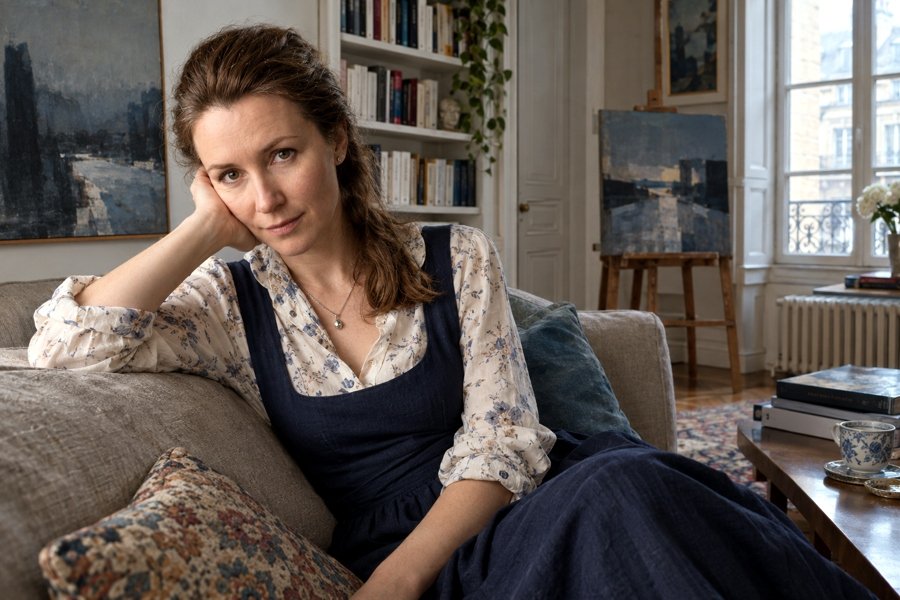
Barbara le Louverot
Barbara Le Louverot – The Relics of Everyday Life and Modern Vanities
In a register that is both caustic and deeply melancholic, Barbara Le Louverot questions our ways of life through the prism of overconsumption. First of all, her compositions, painted in acrylic with a palette knife and a rich thickness of texture, stage shelves and accumulations of bags, shoes, and everyday objects.
Indeed, these vestiges of our interiors are not mere waste: they impose themselves as the future signatures of our existence. Like new vanities, these accumulations form the archaeological relics that the future – or potential explorers from elsewhere – will discover to decipher our obsessions, our frantic race, and the intimate trace of our passage on Earth.
Barbara Le Louverot: Modern Vanities and the Archaeology of the Superfluous
-
An archaeology of daily life: Through a palette-knife acrylic with a rich and generous texture, Barbara Le Louverot examines our lifestyles through accumulation. Thus, her shelves overloaded with bags, shoes, and everyday objects act as the contemporary vestiges of our passage on Earth.
-
Modern vanities: Consequently, between social critique and an absurd nod to Douglas Adams, the artist imagines what extraterrestrial life or a distant future will discover of our civilization. Our overflowing closets and overconsumption thus become the new tragic-comic signatures of our existence.
-
Trace and memory: For this reason, far from a simple ecological observation, the artist’s incisive touch transforms our waste and accumulated objects into an intimate reflection. In this way, each piled-up bag and abandoned pair of shoes whispers a human presence, questioning what we choose to leave as a legacy.
Marie Isabelle – The Praise of Suspended Movement and the Memory of Origins
Through her acrylic painting of a flying gurnard, Marie Isabelle captures the grace of an eternally suspended movement.
First of all, a foundational work created in 2014 on her very first handmade stretcher frame, this canvas marks the starting point of a passionate exploration of the living world. Indeed, the artist deploys a subtle and meticulous touch, superimposing layers to offer the creature a quasi-fossil and poetic presence. Emerging from the depths against a dark background, this aquatic subject becomes the timeless witness of a sovereign nature, whose vestiges traverse time with intact majesty.
Artwork Study: Aquatic Grace and the Rigour of the Brushstroke
-
A sculptural presence: Thus, the flying gurnard, with its aerial fins deployed like sails, appears frozen in a timeless universe. The striking contrast between the dark background and the luminous blue ground propels the animal into the foreground, conferring upon it a mysterious and monumental aura.
-
The mastery of matter: Although created in acrylic to capture the spontaneity of the stroke, the work is crafted through smooth transitions, recalling the depth of oil painting. Furthermore, every nuance and impasto effect brings a fleshly and realistic dimension to the canvas.
-
The trace of time: Finally, exhibited at the Château du Bois la Croix in Pontault-Combault in February 2026, this emblematic canvas embodies the anchor point of the artist’s journey. It invites the visitor to contemplate the persistence of wild beauty in the face of the test of time.

Marie Isabelle
The Next Stage of the Journey?
Extending Memory and Suspended Time….
As this first journey through bodies and memory draws to a close – guided alongside Gilles Roux, Valaine de Ranson, Barbara Le Louverot, and Marie Isabelle – Galerie Les Koronin invites you to cross a new temporal threshold.
Thus, from December 4, 2026, to January 4, 2027, the second chapter of the exhibition “Vestiges of the Future: The Imprint of Time” will take over. Indeed, this new installment will deepen our exploration of contemporary ruins and humanity by welcoming the works of Isabelle Morin, our artistic collaborator Team Lumen, as well as those of Artemis Irenäus von Baste and Tamhuy.
In conclusion, the journey through eras and materials continues. Stay with us to discover the next part of this grand artistic story!
Copyright / AI Watermark
Information note: To protect the work of female designers from unauthorised reuse, the images shown on this page feature an AI-generated digital watermark. If you have any questions, you will find all the answers on our page FAQ.
Are you a creative person working in the fine arts?
We’d be delighted if you joined our Swiss–French online gallery, open 24/7 to the whole world!
Would you like to take part in our art classes?
We’d truly love to welcome you among us.

0 Comments